The Adlon History
A Living Legend by the Brandenburg Gate
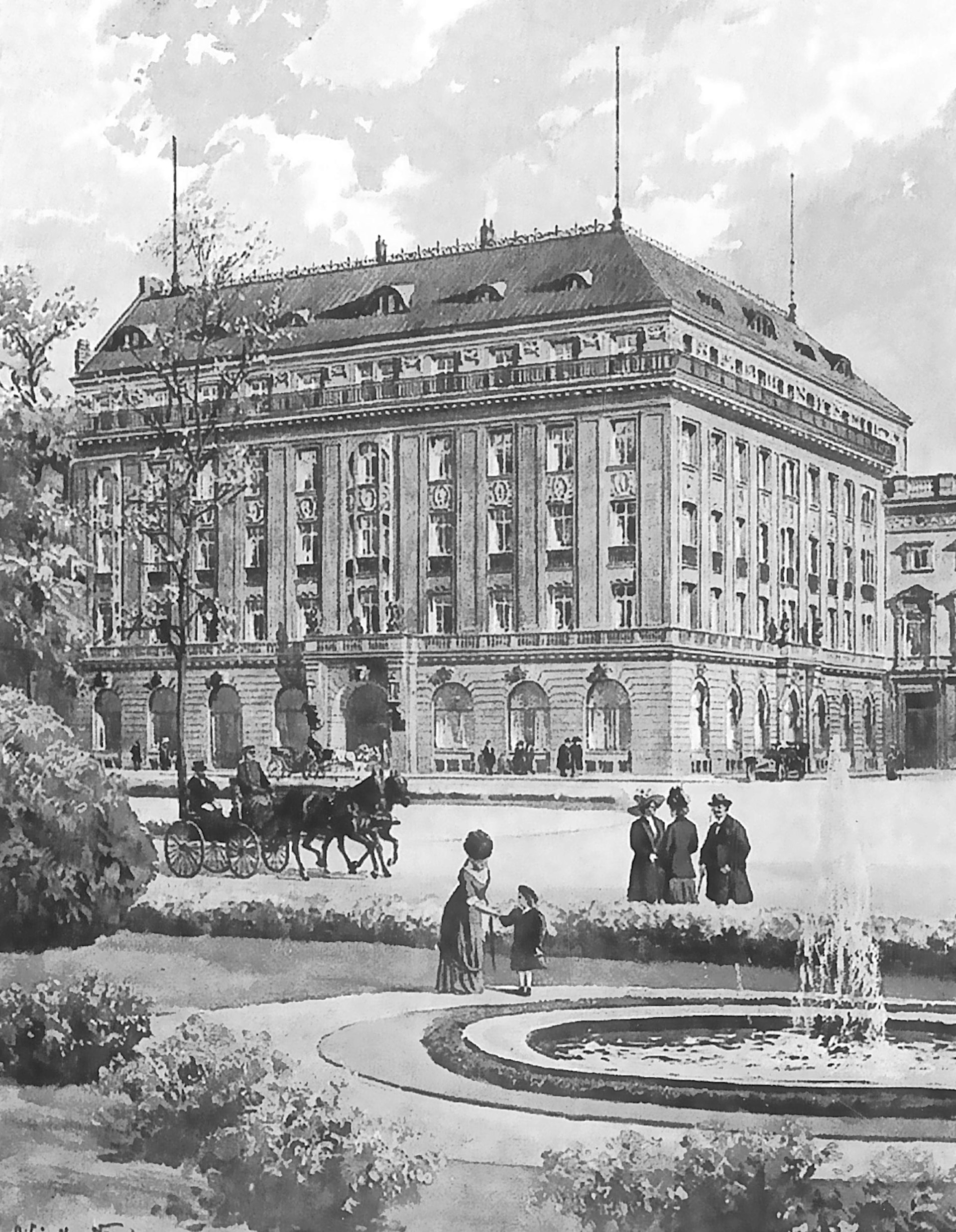
The Emperor and Empress stepped through the grand portal of the new building, accompanied by princes, princesses and the imperial entourage. What unfolded on that October day in 1907 at Pariser Platz was far more than a conventional hotel opening; it was celebrated as an affair of state. Wilhelm II, well ahead of his time in the art of public representation, inaugurated Berlin’s most prestigious grand hotel at a time that ensured maximum publicity. ‘Flawless!’ came his imperial verdict. The Adlon had received the royal seal of approval, marking the beginning of an extraordinary hotel legend.
Join us on a journey through the illustrious history of Hotel Adlon Kempinski Berlin.
1905–1945
Kaiser Wilhelm II assured Lorenz Adlon of his personal patronage when the latter laid the foundation stone for the flagship of German hospitality at Pariser Platz. While this is historically documented, countless legends and anecdotes surround the house, as befits a world-renowned grand hotel steeped in tradition.
From the very beginning, the Adlon was not only the premier address in town, but also the most modern. Guests did not merely stay in luxury; they celebrated the social life of the metropolis. Statesmen, crowned heads and world-famous personalities were regular guests. The guest list of the first decades reads like a Who’s Who of the Imperial Era and the Weimar Republic, with icons such as Charlie Chaplin, Albert Einstein and Thomas Mann.
1905–1907
Having already secured the right of first refusal for the historic Palais Redern between Unter den Linden and Behrenstraße in 1904, valid until 1 October of that year, Lorenz Adlon, a Mainz restaurateur with visionary foresight, began construction of the hotel in 1905. Following the demolition of the palace, architects Carl Gause and Robert Leibnitz built the Hotel Adlon in just two years. Its guiding principle was Adlon’s famous maxim: ‘At the Adlon, one does not simply stay. At the Adlon, one wants to be.’
23 October 1907
The official opening of the hotel took place on 26 October. However, the defining moment had come three days earlier, as the Kaiser had stipulated that he be the first to set foot in the new hotel. The construction costs amounted to the astronomical sum of 17 million gold marks at the time, equivalent to around 400 million euros in today’s purchasing power. The bold investment paid off. The hotel immediately established itself as a social hub for the high aristocracy, politics and culture.
1921
Lorenz Adlon succumbed to the injuries sustained in a severe traffic accident at the Brandenburg Gate. Ownership of the hotel passed to his eldest daughter, Anna Förster, and her younger brother, Louis Adlon. On New Year’s Eve of that same year, Louis met his future wife, Hedda, who would go on to shape the hotel’s public image for decades to come.
1925–1930
During the Golden Twenties, Berlin attracted up to 1.7 million travellers annually, and for international high society, all roads inevitably led to Pariser Platz. The hotel’s glamorous tea dances were particularly legendary. Fine music drifted through the salons as international society gathered over tea and champagne, creating the sparkling, cosmopolitan atmosphere that can still be felt in the Adlon lobby today. At the same time, the hotel became a springboard for the global stars of tomorrow: it was here that Greta Garbo signed her first major contract and Marlene Dietrich was discovered. Contemporary travel guides agreed that the Adlon was far more than a luxury hotel; it was an institution of global renown.
From 1933
With the seizure of power in 1933, Berlin’s grand hotels initially experienced a noticeable downturn. Many international travellers cancelled their stays out of concern over the political upheaval and reports of violent incidents. Just as during the hyperinflation of 1923, the Adlon faced considerable financial challenges. Nevertheless, the hotel held its ground as an indispensable diplomatic hub, continuing to host glittering press balls, fashion shows and the famous UFA cocktail-mixing competitions. During this period, Louis Adlon also demonstrated personal integrity, helping his Jewish apprentices emigrate overseas by providing them with first-class references. Even during the Second World War, despite being under close scrutiny by the National Socialists, the Adlon preserved its distinctive character as a sanctuary in the lion’s den. Menus continued to be written in French as a matter of course, and resistance circles formed behind the scenes.
April 1945
Throughout the Battle of Berlin, the building remains largely intact, with only the ground-floor windows bricked up for protection. In the final weeks of the war, its palatial halls serve as an emergency military hospital, providing care for hundreds of wounded.
May 1945
On the night of 2–3 May 1945, a catastrophic fire breaks out, reducing the main building to ruins except for a side wing along Behrenstraße. Louis Adlon also does not survive the aftermath of the war, passing away shortly after his arrest in May 1945.
From June 1945
Driven by the unwavering spirit of its remaining staff, the preserved side wing is quickly refurbished to resume modest hotel and dining operations.
1949–1997
When the war left nothing more than the back economic wing of the Adlon, the hotel was not over.
2 December 1949
The property is expropriated without compensation. Over the following years, the surviving wing continues operations as the state-owned enterprise ‘VEB Hotel Adlon’.
1955
Hedda Adlon sells the pre-emptive rights for the real estate and the name "Adlon" to Kempinski AG.
Drawing on Hedda Adlon’s celebrated autobiography, director Josef von Báky brings the glamour of the pre-war years back to life in the feature film Hotel Adlon.
1964–1970s
Following extensive façade restoration, the building continues to welcome dining and lodging guests. Despite the shortages of the socialist era, the team upholds traditional grand hotel standards, with page boys and footmen continuing to wear the original 1930s uniforms. In the 1970s, the building is repurposed as a boarding facility for hospitality apprentices.
1984
The SED Politburo resolves to clear the remaining structure, and the historic wing is demolished by implosion later that year.
1995 – 1997
The rebirth of a legend begins. Renowned Berlin architecture firm Patzschke, Klotz & Partner designs a new landmark on the historic site that echoes the classical architecture of the original while incorporating state-of-the-art technology. Financed by Fundus Fonds-Verwaltungen GmbH, Kempinski assumes operational management as Europe’s oldest luxury hotel group.
23 August 1997
In the presence of Federal President Roman Herzog and General Manager Gianni van Daalen, the new Hotel Adlon Kempinski Berlin is officially inaugurated before an international audience.
1997–Present
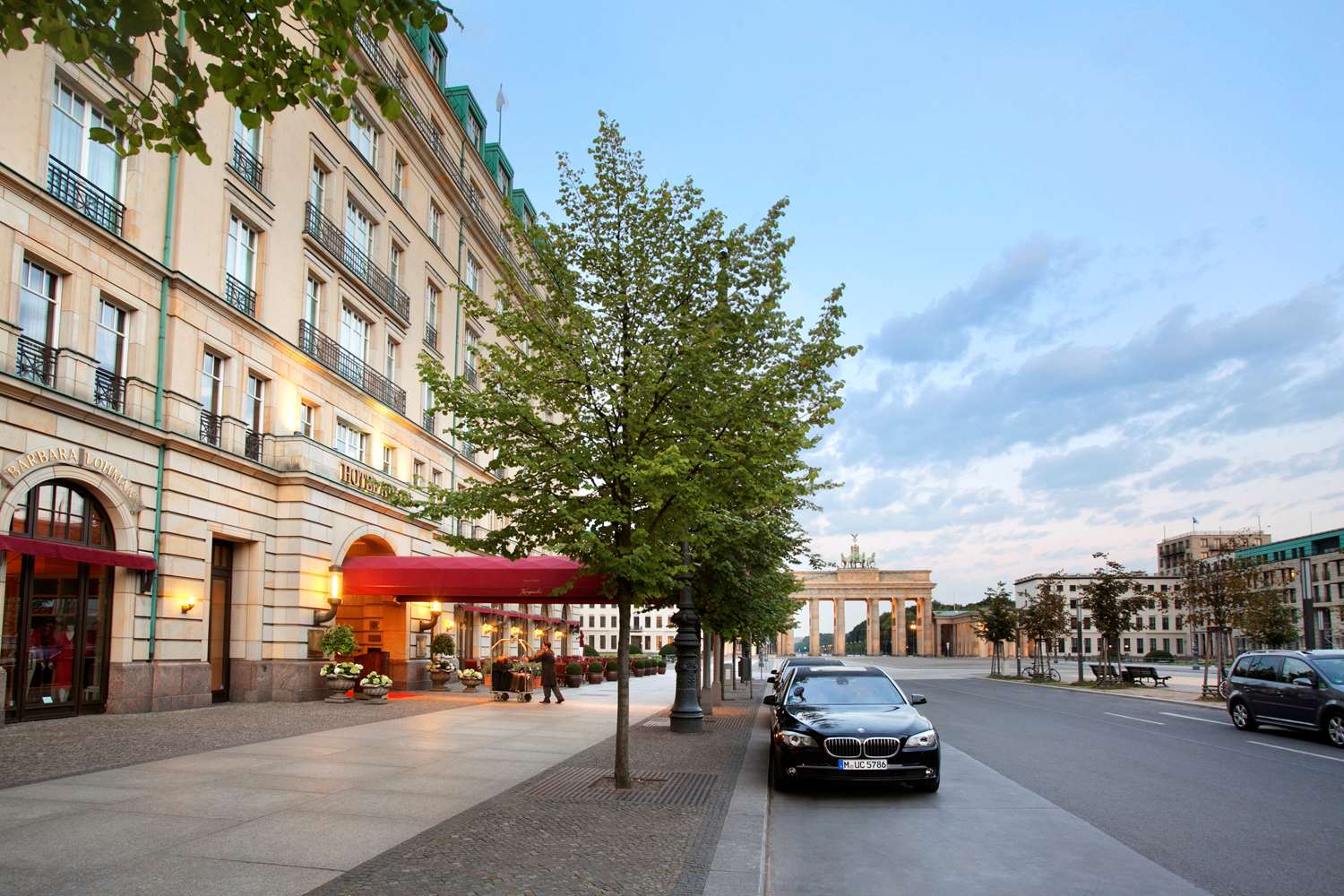
Since 23 August 1997, Hotel Adlon Kempinski Berlin has reclaimed its place beside the Brandenburg Gate, radiating the elegance and prestige of its golden era. The grand hotel quickly re-established itself as Berlin’s premier destination for visiting heads of state, captains of industry and international luminaries. Through continuous investment and meticulous refinements, the hotel continues to set benchmarks in luxury hospitality worldwide.
2000
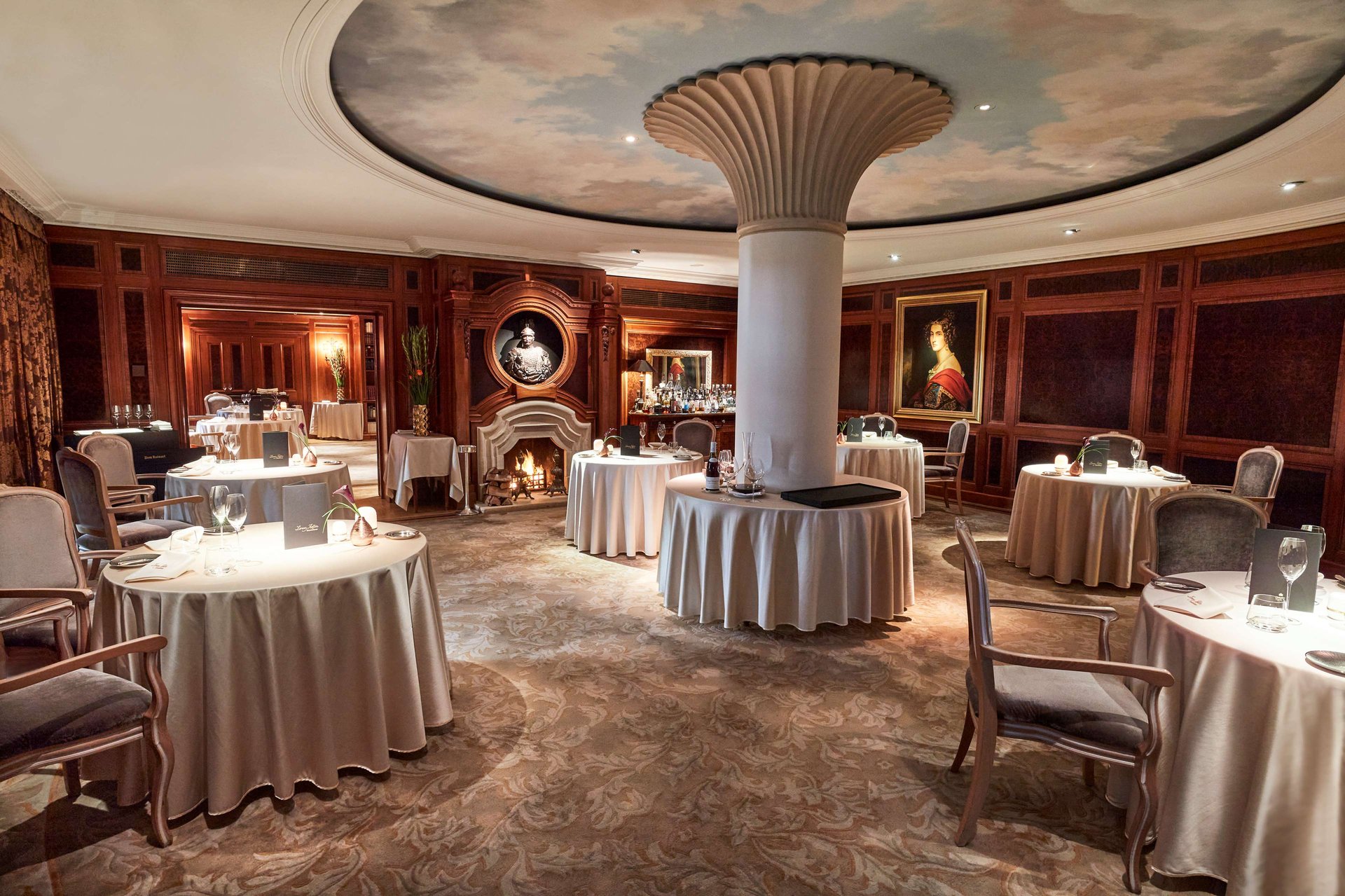
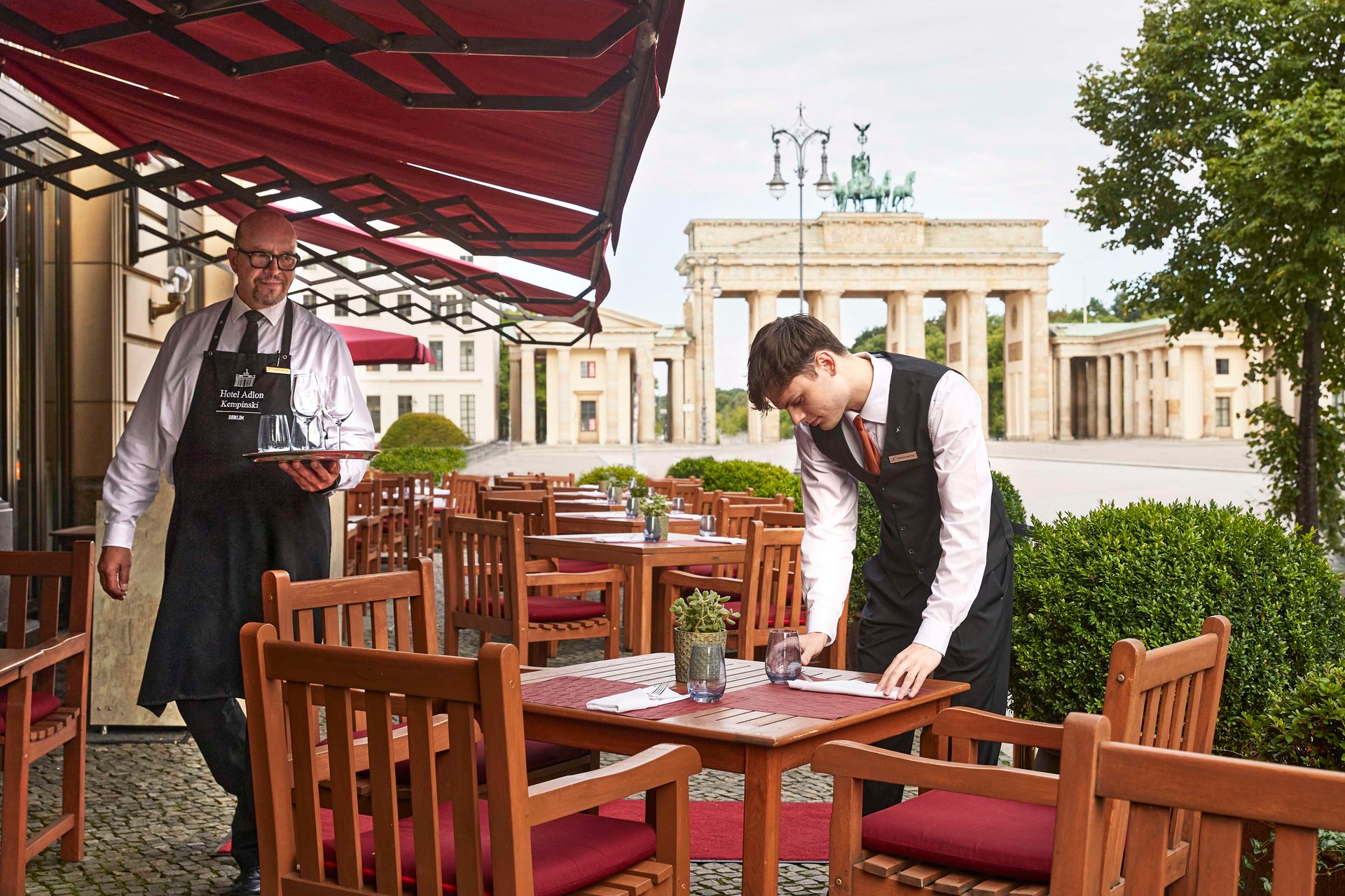
On 29 February, fine-dining restaurant Lorenz Adlon Esszimmer opens under the culinary direction of Karlheinz Hauser, earning its first Michelin star just one year later. That same summer, the popular outdoor terrace opens its doors, offering 170 seats and sweeping views of the Brandenburg Gate.
2003–2004
The hotel expands significantly. With the development of the Adlon Palais, the property gains a second 450-square-metre ballroom, state-of-the-art conference facilities, the exclusive China Club and the Felix Club Restaurant. In May 2004, the newly constructed Adlon Residenz on Behrenstraße adds a further 69 luxury rooms and suites.
2006
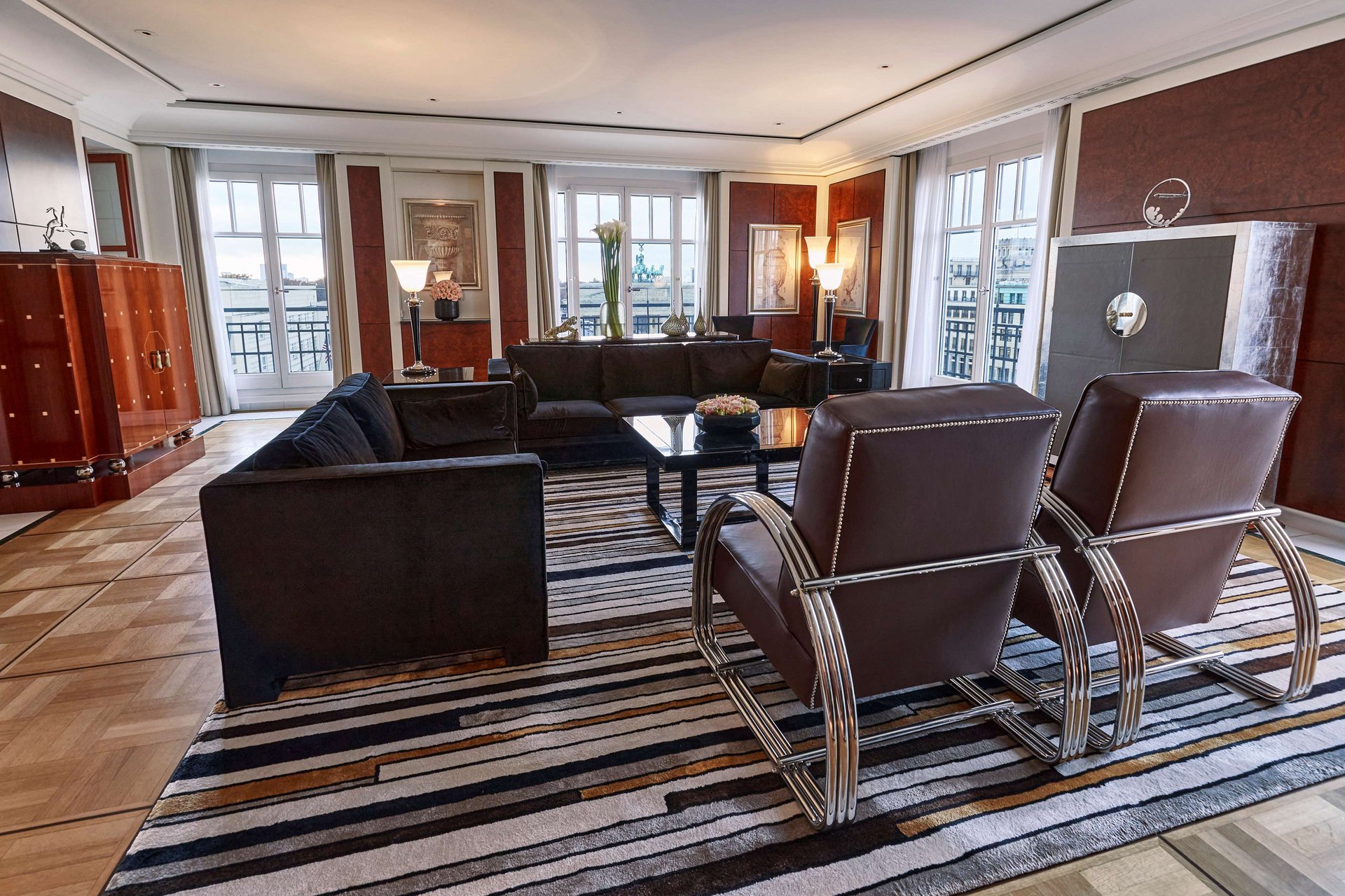
Alongside the conversion of 48 guest rooms into 24 generous suites, the hotel unveils its third presidential accommodation, the Imperial Suite. In July 2006, the signature wine-red canopy is installed above the main entrance, welcoming arriving guests in timeless style.
2011–2012
Under Executive Chef Hendrik Otto, Lorenz Adlon Esszimmer is awarded its second Michelin star in 2011, maintaining this distinction for more than a decade. In October 2012, the 900-square-metre luxury wellness facility opens as the Adlon Spa by Resense.
2013
The hotel expands its culinary repertoire with the opening of SRA BUA, showcasing contemporary Asian freestyle cuisine. In 2021, the space is redesigned as the versatile event venue ‘1907’, featuring an open show kitchen, a living vertical garden and an intimate bar with a glass fireplace.
2016
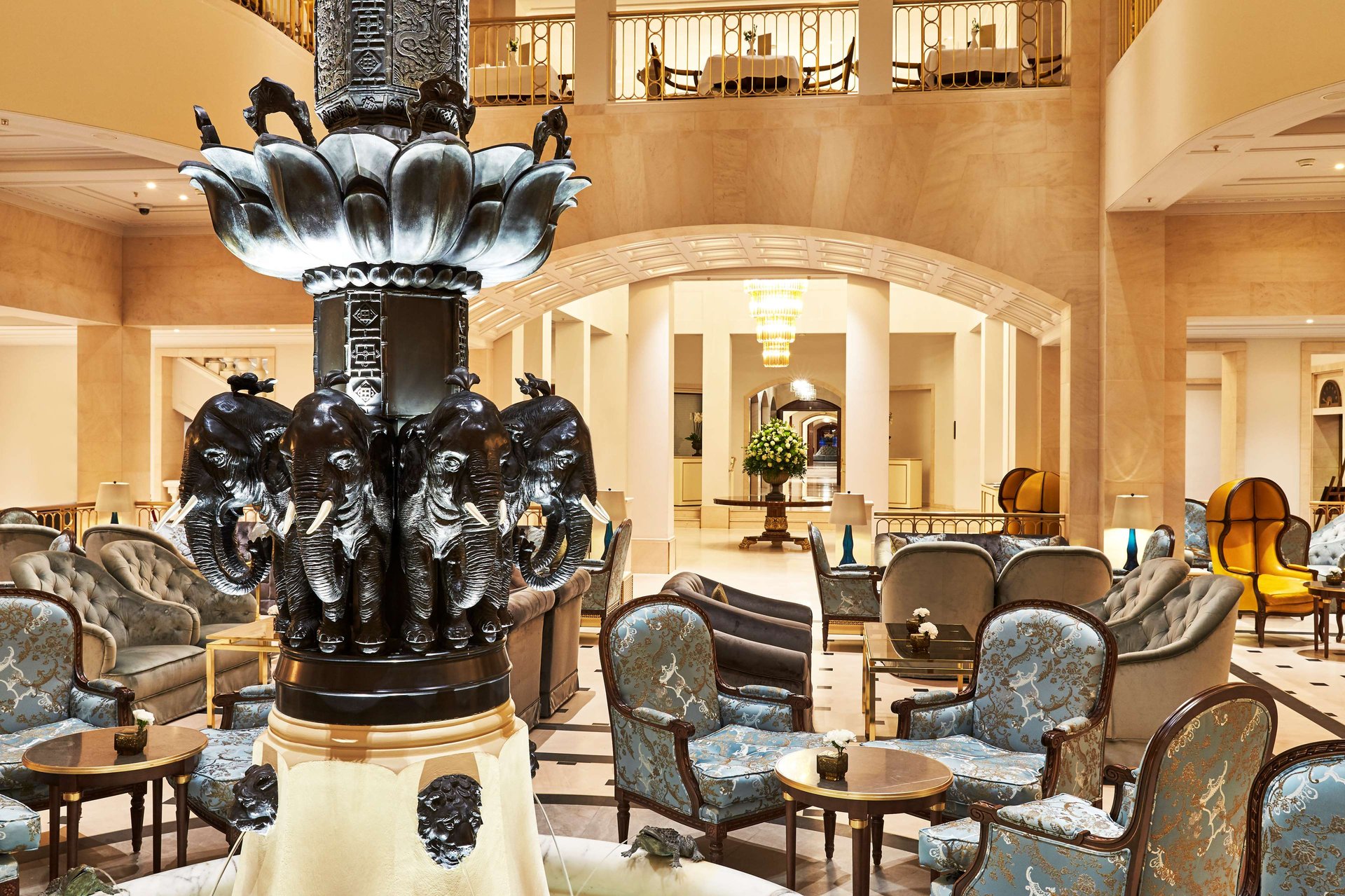
In anticipation of the hotel’s upcoming 20th anniversary, the ground floor undergoes an extensive six-million-euro redesign. The lobby and reception area are revitalised with sophisticated furnishings and a contemporary lighting scheme that gracefully accentuates their historic charm.
2018
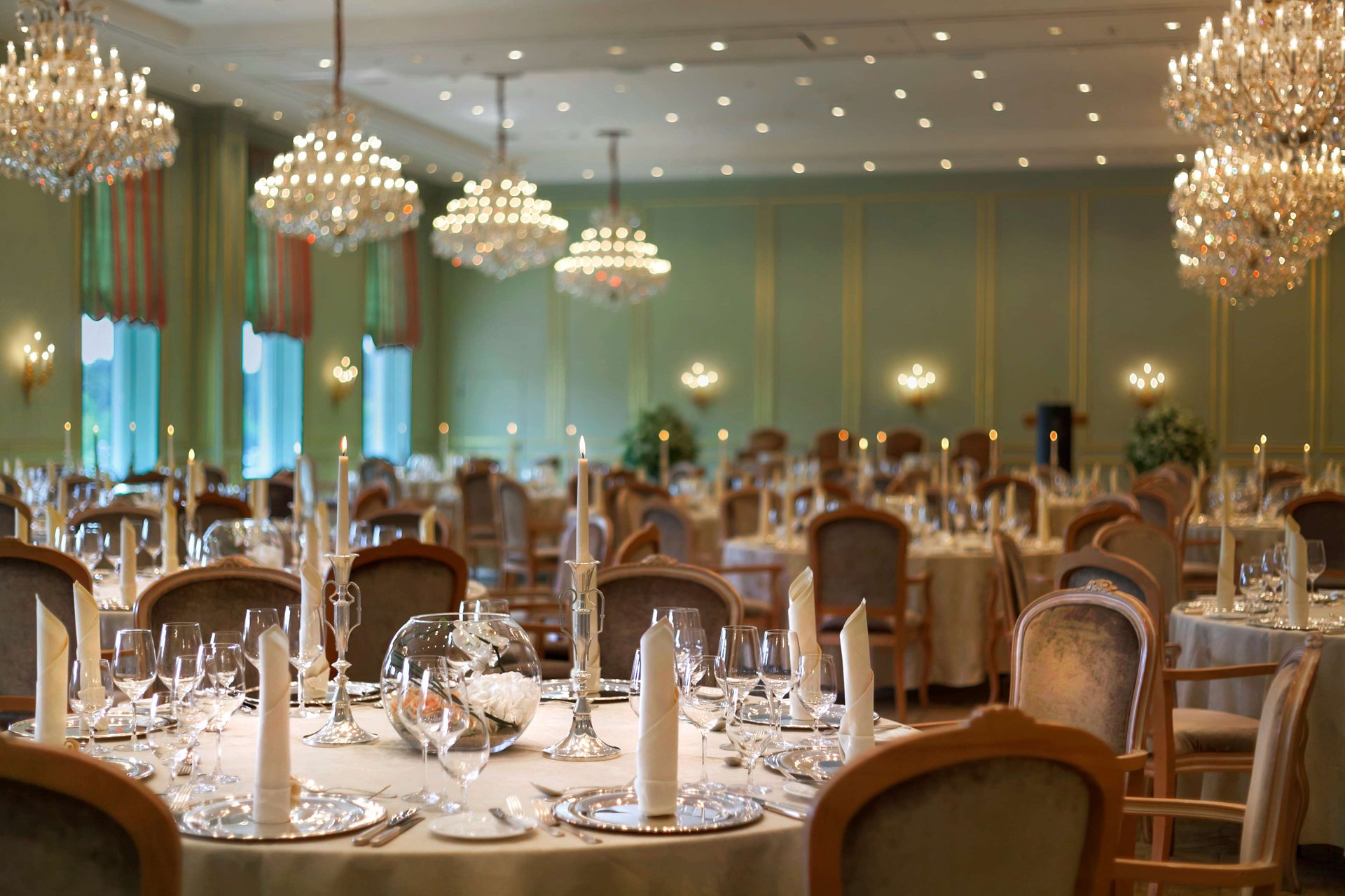
The event facilities are comprehensively upgraded. The historic ballroom undergoes a full refurbishment, emerging as a sophisticated, versatile venue. Featuring handcrafted Murano glass chandeliers by Venini, bespoke Versailles-parquet-patterned carpets by Tai Ping and antique Verre Églomisé mirrors, the space marries heritage glamour with advanced event technology.
2022
Marking Kempinski Hotels’ 125th anniversary, Hotel Adlon Kempinski Berlin celebrates 25 years since its grand reopening on 23 August with a curated series of commemorative events.
2023
The ground-floor cigar lounge, originally introduced during the 2016 lobby transformation, is unveiled with a fresh identity. Paying homage to the beloved elephant fountain nearby, it reopens as the Elephant Bar with an enhanced cigar and spirits selection.
2024
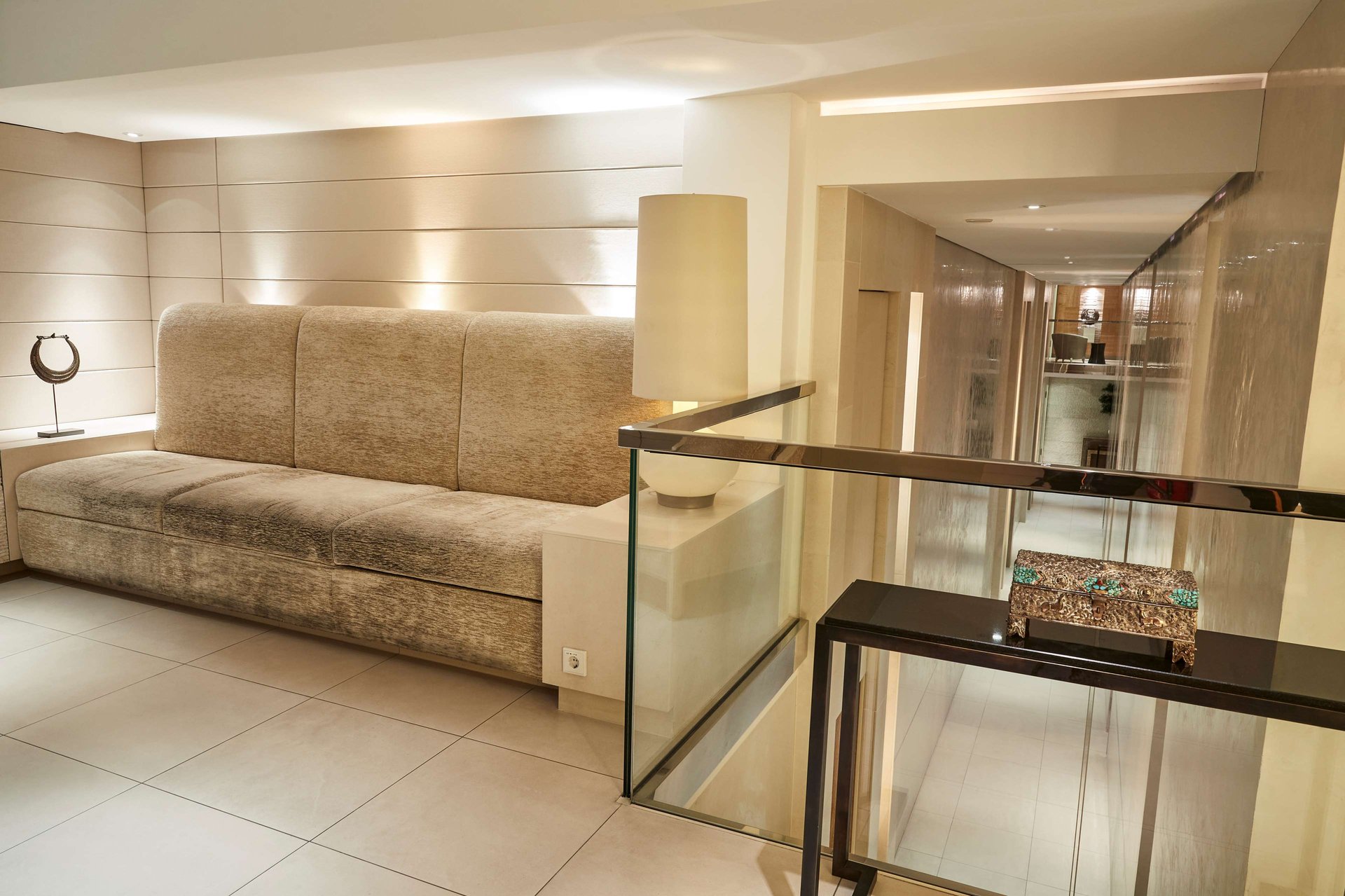
Following an eight-month comprehensive renovation, the Adlon Pool reopens in renewed splendour. The revitalised wellness area offers guests a refined retreat for quiet relaxation and holistic rejuvenation.
2025
Lorenz Adlon Esszimmer celebrates a quarter-century of culinary excellence. Under the creative direction of Head Chef Jonas Zörner, the restaurant continues to delight discerning palates with outstanding haute cuisine and proudly holds one Michelin star.
or to enjoy up to 10% off your next stay.