
Blue Mosque
Sultan Ahmed: The Blue Mosque
Fatih, İstanbul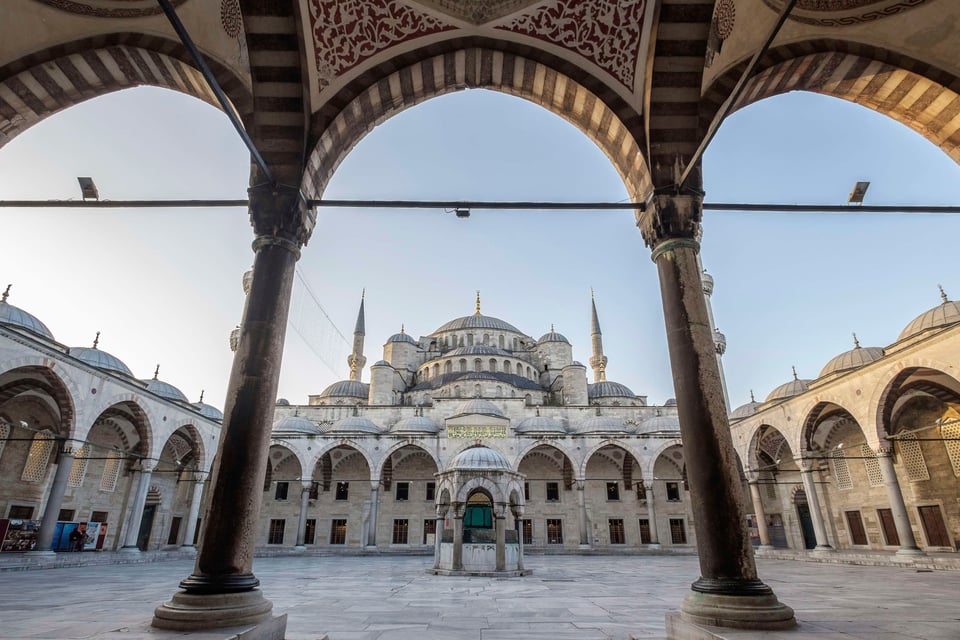
The Sultan Ahmed Mosque, universally celebrated as the Blue Mosque, stands as an enduring and magnificent symbol of Ottoman classical architecture. Its construction, a monumental undertaking commissioned by Sultan Ahmed I, began in 1609 and was completed in 1616, just prior to the Sultan's untimely death.
Renowned globally for its distinctive silhouette against the Istanbul skyline, the mosque is characterized by its six towering minarets—a unique feature that initially caused controversy as it matched the number of minarets at the Sacred Mosque in Mecca, a situation later resolved by adding a seventh minaret to the Kaaba. Beyond its external grandeur, the Blue Mosque's true magic lies within its interior. It is here that over 20,000 hand-painted blue İznik tiles, meticulously crafted with intricate floral and abstract patterns, adorn its walls and domes. These exquisite tiles, produced in the town of İznik (ancient Nicaea), are celebrated for their vibrant blue hues, which give the mosque its popular moniker.
The interplay of natural light filtering through more than 200 stained glass windows further enhances the ethereal glow of the blue tiles, creating a serene and visually captivating atmosphere. Grand calligraphy, featuring verses from the Quran, adds to the spiritual gravitas of the space. The mosque's vast interior is supported by massive "elephant feet" pillars, contributing to its sense of immense scale, while the cascading domes draw the eye upwards towards the heavens.
The Blue Mosque was part of a larger complex, or külliye, which included a madrasah (theological school), a hospice, and the tomb of Sultan Ahmed I himself. This integrated design underscored its role as a central hub for religious, educational, and charitable activities in the Ottoman capital. Today, the Blue Mosque remains an active mosque, welcoming worshippers and millions of visitors annually, who come to marvel at its artistic brilliance, architectural ingenuity, and profound religious significance, making it an indispensable part of any visit to Istanbul.
Distance to the hotel
- The hotel is just a 30-40 minute journey by car or public transport.
Transfer & Concierge Service
- For detailed information about our transfer services and concierge services, please click here.
or to enjoy up to 10% off your next stay.