Basilica Cistern
Basilica Cistern: Istanbul's Underground Marvel
Fatih, İstanbul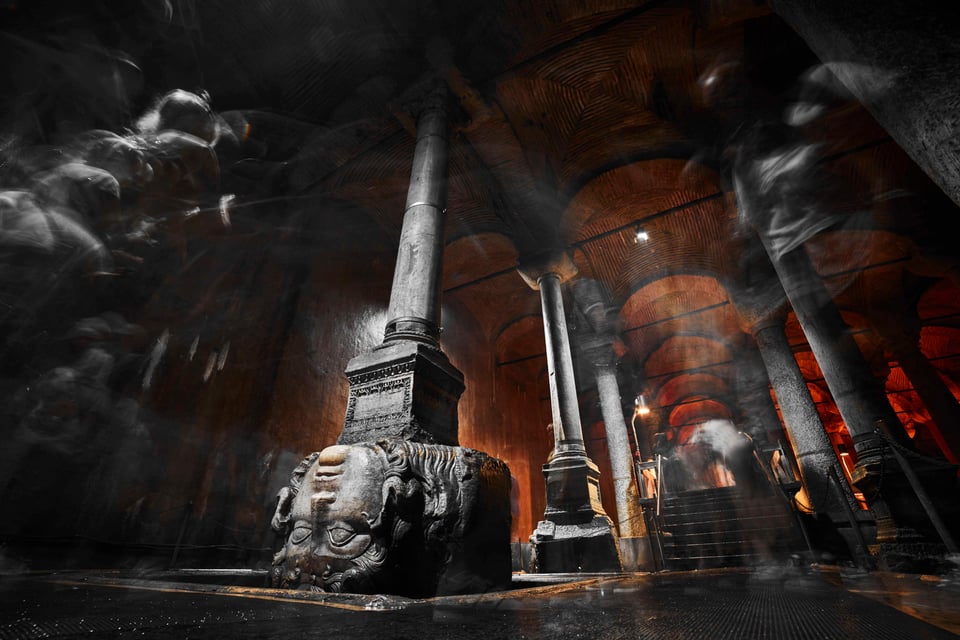
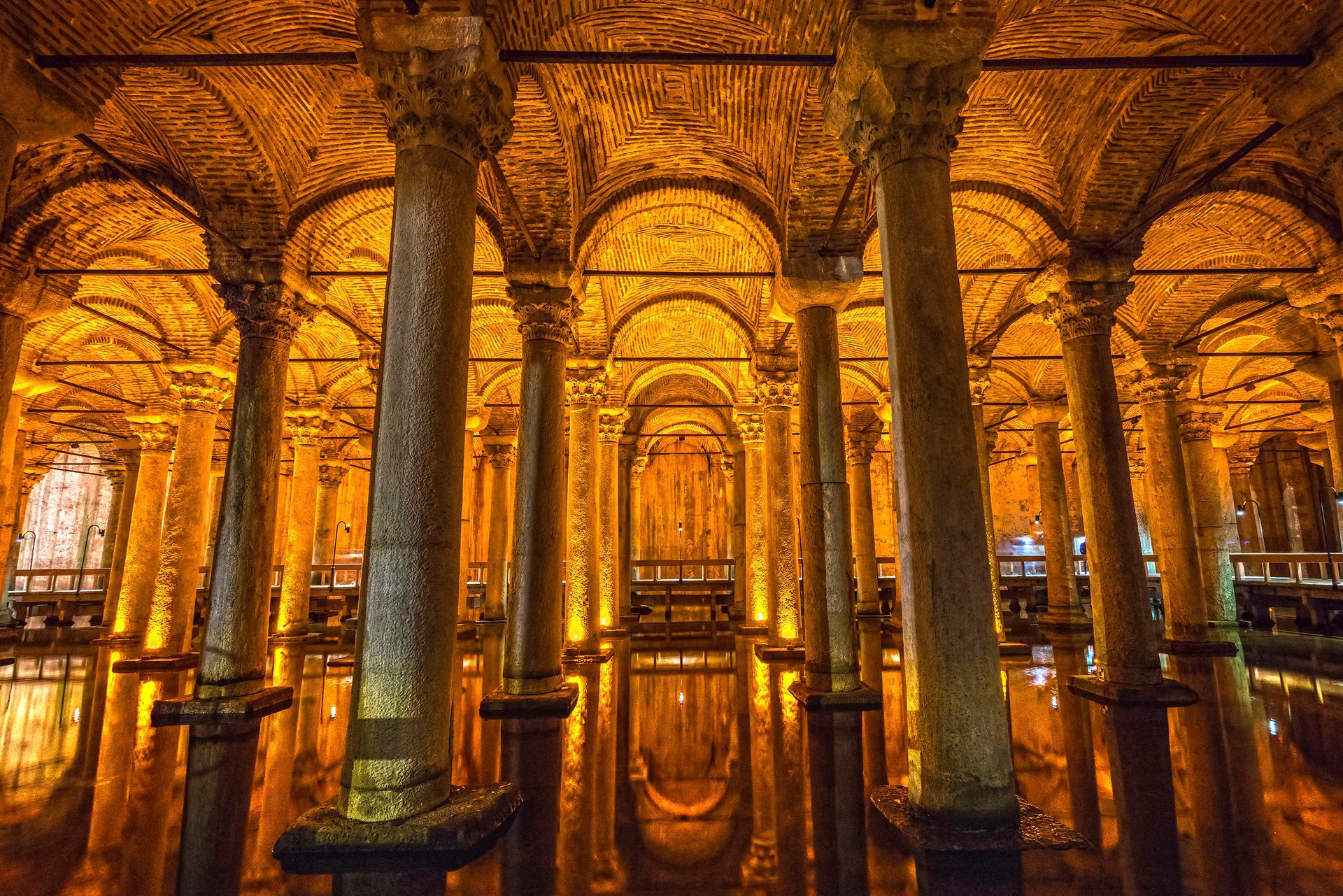
Descend into the mystical depths of the Basilica Cistern in Istanbul, an ancient underground water reservoir built in the 6th century during the Byzantine Empire. Known locally as Yerebatan Sarnıcı, or the Sunken Palace, this awe-inspiring structure features hundreds of illuminated marble columns rising from the water, creating an ethereal atmosphere.
Its construction was commissioned by Byzantine Emperor Justinian I in 532 AD, primarily to supply water to the Great Palace of Constantinople and surrounding imperial buildings. The cistern is a colossal feat of engineering, measuring approximately 140 meters long and 70 meters wide, covering an area of nearly 9,800 square meters. It has the capacity to hold an astonishing 80,000 cubic meters of water, which was transported from the Belgrade Forest, about 19 kilometers north of the city, via the Valens Aqueduct.
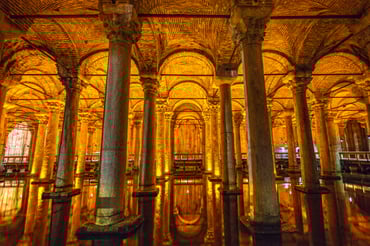
The cistern is supported by a dense forest of 336 marble columns, each 9 meters tall, arranged in 12 rows of 28 columns. Many of these columns were recycled from earlier Roman structures, showcasing a variety of styles, including Ionic and Corinthian capitals, and some even bear engraved designs. The most famous attractions are the two Medusa heads, mysteriously placed upside down and sideways at the base of columns. Their origins and precise purpose remain debated, with theories ranging from their use as column bases to their placement as protective symbols, perhaps to ward off evil spirits, or simply to fit the size requirements of the columns.
After the Ottoman conquest of Constantinople in 1453, the cistern continued to supply water to Topkapi Palace for a time, but it was eventually forgotten by the authorities, only to be rediscovered in 1545 by the Dutch traveler Petrus Gyllius, who was researching Byzantine antiquities. Today, the Basilica Cistern is a fascinating example of Byzantine architecture and a truly unique historical experience, offering visitors a cool, tranquil escape from the bustling city above and a glimpse into Istanbul's rich, layered past.
Distance to the hotel
- The hotel is just a 30-45 minute journey by car or public transport.
Transfer & Concierge Service
- For detailed information about our transfer services and concierge services, please click here.
or to enjoy up to 10% off your next stay.